
When a person is injured after slipping or tripping on another party’s property, legal professionals can help evaluate whether the incident involves premises liability and what formal steps follow. These practitioners typically review facts such as the location, the condition that caused the fall, who controlled the property, and any warnings or maintenance records. Their role often includes determining whether a property owner or manager owed a legal duty, whether that duty was breached, and whether the breach may have contributed to the injured person’s losses. The focus is factual assessment and legal framing rather than medical or financial advice.
Such legal representation often begins with a factual intake and moves toward assembling evidence, drafting documents, and handling communications with insurers or opposing parties. Attorneys commonly coordinate investigations, obtain medical records, and document the scene in ways that aim to preserve relevant details. They may advise on timelines that affect eligibility to bring a claim and explain procedural steps that could follow, such as pre-suit negotiations or filing a formal complaint. The objective is to clarify legal options and procedural pathways based on the available evidence.

Early case assessment often involves identifying applicable legal elements and relevant timelines. Attorneys typically review whether a property owner owed a duty to the injured person, which can depend on visitor status (invitee, licensee, trespasser) in some legal systems. They may consider statutes of limitations, which in various jurisdictions may range from one to several years, and note that timely action can affect the ability to gather perishable evidence. Intake can also reveal contributory factors like footwear, lighting, or weather conditions that may influence legal theories or potential allocation of responsibility.
Investigative steps commonly focus on preserving evidence that can degrade or disappear. Photographs and video of the scene, contemporaneous witness statements, incident reports, and physical items involved in the fall may be collected. Attorneys often request preservation of surveillance footage and obtain maintenance or inspection logs that could document how long a hazardous condition existed. These measures may assist in establishing causation and foreseeably reduce disputes over the condition’s existence or duration before the incident.
Medical documentation and treatment records are central to describing injuries and linking them to the fall. Attorneys typically gather initial emergency records, follow-up notes, imaging reports, and any rehabilitation or therapy documentation that relate to the injury. Medical records can be used to estimate both immediate and ongoing care needs, time away from normal activities, and functional limitations. In many cases, experts may be asked to interpret records to connect clinical findings with the mechanics of the incident without offering guarantees about outcomes.
Communication with insurers and opposing parties often follows structured stages: notification, exchange of information, and negotiation. Attorneys commonly prepare demand letters that summarize facts, injuries, and losses, while preserving the option to file formal claims. Negotiations may involve examination of liability, assessment of damages, and efforts to narrow factual disputes. If negotiations do not resolve the matter, litigation steps such as filing pleadings and engaging in discovery can follow. Each path carries procedural requirements that vary by jurisdiction and case specifics.
In summary, legal representation after a fall on another party’s property typically encompasses evaluation of liability, evidence preservation, documentation of injuries, and managed interaction with insurers or courts. Professionals in this area often coordinate investigation, expert input, and procedural filings to clarify options and potential outcomes. The next sections examine practical components and considerations in more detail.
Initial evaluation often centers on the legal elements that may support a premises liability claim and the factual predicates needed to assert them. Practitioners typically seek to determine who controlled the premises, the injured person’s status as a visitor, and whether a hazardous condition existed that the owner knew or should have known about. In many jurisdictions, duty and breach assessments depend on these facts, and attorneys may explain how comparative or contributory fault rules can affect potential recovery. Early evaluation may also include discussions of likely timelines for evidence preservation and statutory limits on filing claims.

Client interviews during intake commonly aim to document a clear chronology of events and immediate responses to the incident. Practitioners may ask for details about the surface condition, lighting, signage, and any prior complaints about the area. They often note whether incident reports were made by property staff and whether medical care was sought promptly, since initial treatment records can be relevant to causation. These interviews also help identify potential witnesses and whether surveillance or maintenance documentation might still be available for preservation requests.
Legal assessments routinely include review of jurisdictional rules that affect elements of a claim. For example, some legal systems apply a visitor classification schema, while others emphasize a general duty of reasonable care. Attorneys may explain how these frameworks typically influence whether a property owner’s actions or inactions could be considered negligent. They may also note that local case law and statutory frameworks can shape outcomes, and that factual nuance often determines whether a claim proceeds to negotiation or formal litigation.
Practical considerations during assessment often involve estimating resources needed to develop the case, such as expert evaluations or technical inspections. Lawyers may discuss how long-term medical follow-up can influence damage assessments and whether specialized testimony might be necessary to explain site conditions or injury mechanisms. These considerations are typically framed as factors to evaluate rather than prescriptive steps, helping the injured person understand potential procedural paths and informational needs for later stages.
Evidence gathering is critical and often begins at the scene when feasible. Standard practices include photographing the exact location, noting the dimensions and materials involved, and collecting evidence of transient conditions such as spilled liquids or icy patches. Preservation requests for surveillance footage are frequently used to prevent deletion, and practitioners typically document the identities and contact information of witnesses promptly. The goal is to create a contemporaneous record that can support factual claims about the condition and sequence of events without asserting expected results.
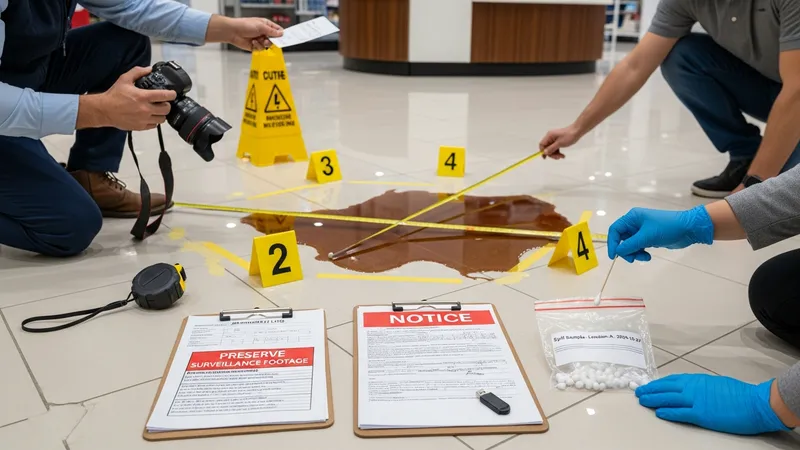
Documentation beyond the scene often involves seeking maintenance, inspection, and incident logs that may show prior complaints or remedial efforts. Such records can help establish how long a condition existed and whether property managers followed cleaning or inspection protocols. Attorneys may also review policies and training materials related to premises upkeep to evaluate whether practices aligned with reasonable care expectations. These inquiries are fact-finding in nature and commonly inform whether negotiation or litigation is advisable given the strength of the documentary record.
Medical and biomechanical evidence play a role in connecting the fall to injury outcomes. Practitioners often collect emergency department reports, imaging studies, therapy notes, and work-absence documentation to support damage claims. Where causation is contested or injuries are complex, engagement of medical or biomechanical experts may be considered to interpret records and explain how the physical forces at the scene could result in the observed injuries. Such expert involvement is an informational resource rather than a guarantee of any particular legal outcome.
Preserving chain of custody and maintaining organized case files are practical measures that help support admissibility of evidence. Attorneys often track how physical items, digital files, and witness statements are obtained and stored to reduce disputes over authenticity. They may advise on timelines for issuing preservation letters to entities likely to possess relevant footage or records. These steps are typically presented as standard professional measures to maintain evidentiary integrity rather than promises about case resolution.
Formal legal documentation may begin with a demand letter or pre-suit notice that summarizes facts, injuries, and claimed losses. If matters do not resolve, the next phase can include filing a complaint or petition that lays out legal theories and factual allegations. Pleadings articulate the elements the injured party intends to prove, and they set the procedural framework for discovery and subsequent motions. Timelines for these steps vary by jurisdiction, and practitioners commonly explain how local rules shape deadlines and filing requirements for each phase.

Discovery processes typically allow both sides to exchange information through requests for documents, written interrogatories, and depositions. Attorneys often use discovery to obtain maintenance records, surveillance footage, employee statements, and medical releases. Managing discovery involves prioritizing requests that are most likely to influence liability or damages analysis. Case management systems and calendaring tools are frequently used to track deadlines, preservation obligations, and deposition schedules to reduce procedural risks and preserve opportunities for resolution.
Settlement evaluation commonly involves combining factual assessments with medical projections to estimate potential damages. This analysis may factor in medical expenses, lost earnings, and non-economic effects such as reduced daily function. Experts in areas like economics or vocational rehabilitation may be consulted to quantify future impacts. These evaluations are typically presented as probabilistic estimations rather than assured figures, and they are used to inform negotiation posture and to compare settlement offers with potential trial outcomes.
Cost and resource considerations are often part of case management discussions. Litigation can involve filing fees, expert fees, and investigative expenses that may be weighed against the likely benefit of pursuing formal claims. Practitioners often outline these considerations so that clients may make informed choices about pursuing discovery, mediation, or trial. Framing such resource questions as considerations rather than directives helps maintain an informational tone centered on procedural realities.
Interactions with insurers frequently shape the early trajectory of a claim. Initial communications may involve reporting the incident, providing basic documentation, and responding to investigation requests. Attorneys often explain how insurers may investigate liability and damages, and how recorded statements or early admissions can affect negotiations. Negotiation strategies tend to focus on clarifying factual disputes and exchanging substantiating documentation; these strategies are descriptive approaches rather than promises of resolution.
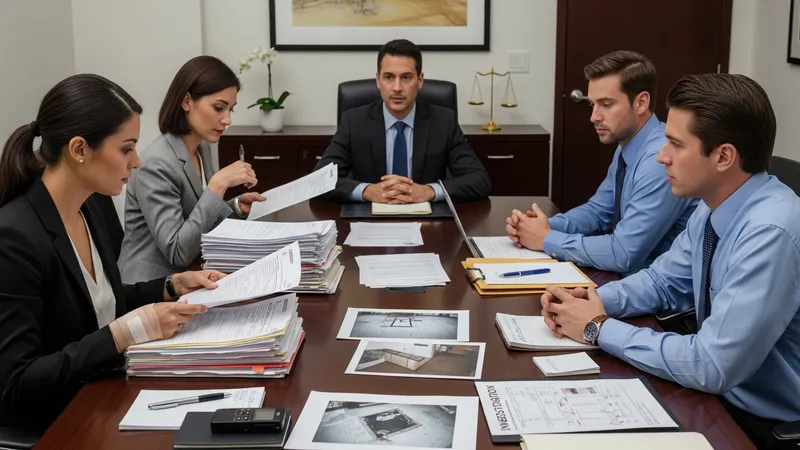
Alternative dispute resolution processes such as mediation or structured settlement conferences are common pathways when parties seek to avoid trial. In mediation, a neutral facilitator may help parties explore settlement without deciding the case; this process typically allows both sides to present positions and consider compromise based on the strength of evidence. Attorneys often describe mediation as one of several avenues for resolving disputes, noting that availability and procedural rules vary by forum and jurisdiction.
When cases proceed to litigation, steps can include pretrial motions, evidentiary hearings, and trial preparation. Trial preparation often involves witness preparation, expert disclosures, and organizing demonstrative evidence. Jury trials may be an option depending on the legal forum, and attorneys commonly explain typical trial timelines and how evidence presented at trial may influence outcomes. Such explanations are framed as descriptions of procedural possibilities rather than assurances about results.
Throughout negotiations and litigation, managing expectations about timing and uncertainty is often emphasized. Many jurisdictions see variation in how long claims take to resolve, influenced by case complexity, court schedules, and willingness of parties to negotiate. Practitioners generally present timelines as approximate and encourage documentation and preservation to support whichever path a case follows, while avoiding guarantees about specific outcomes or recovery amounts.