
Indoor security camera systems are devices designed to capture visual and audio information inside a residence for routine monitoring and situational awareness. A typical system combines an optical sensor, lens, processor, and connectivity components to convert light into digital video streams. These streams may be processed locally on the device or transmitted to remote servers or local storage for later review. Sensors and on-board software often detect motion or changes in a scene, while integrated audio components can provide two-way communication in some designs. Power can be provided by mains, Power over Ethernet (PoE), or battery in portable models.
Hardware and software components work together to deliver usable monitoring. Image sensors (CMOS) determine sensitivity to light, while lenses and field of view define coverage. Infrared LEDs or low-light sensors may support night-time imaging. Software functions commonly include motion detection algorithms, video compression codecs (e.g., H.264/H.265), and user-access controls. Connectivity options such as Wi‑Fi, Ethernet, or proprietary mesh networks affect latency and reliability. Many systems allow configuration of sensitivity, notification preferences, and privacy zones to limit capture of certain areas within a room.
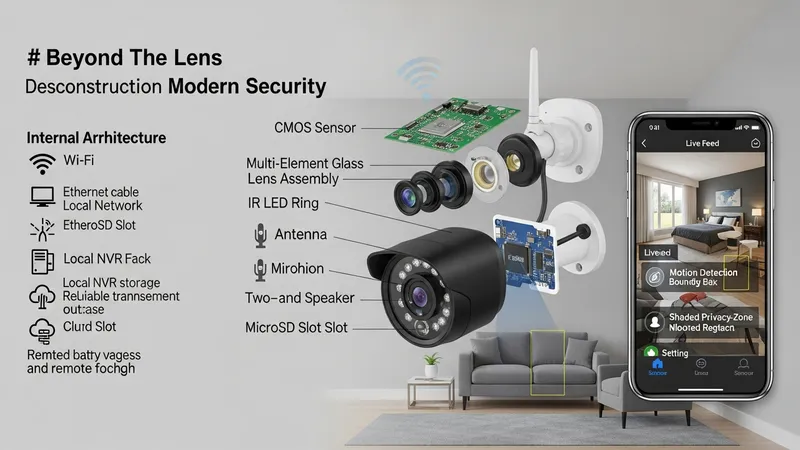
Indoor cameras commonly provide a mix of automated detection and manual review. Motion detection can trigger recording, clip creation, or alerts, and configurations may allow sensitivity adjustment to reduce false positives from pets or lighting changes. Two-way audio permits verbal interaction through an app or a dedicated controller; this feature typically depends on microphone and speaker hardware plus secure transport of audio data. Video quality and bandwidth needs correlate with resolution and frame rate choices: higher resolution increases storage and network requirements, so many systems allow users to select lower-resolution continuous recording alongside high-resolution event clips.
Storage approaches affect privacy and access patterns. Cloud storage often simplifies remote access and off-device redundancy but may involve recurring fees and reliance on provider security practices. Local storage (microSD or NAS) keeps data within the home network and can limit external exposure, though it requires local management and may be vulnerable if the local network is compromised. Hybrid approaches are also available, where short event clips are uploaded while continuous recording stays local. Encryption of data in transit (TLS) and at rest is a typical security consideration when comparing these methods.
Network and connectivity factors play a practical role in performance. Wi‑Fi signal strength, channel congestion, and router capabilities can influence video latency and reliability. Using wired Ethernet or PoE can improve stability and reduce dependence on wireless conditions, but may limit placement flexibility. Bandwidth budgeting is important: continuous high-resolution streaming can consume significant upstream capacity, so many users opt for event-triggered uploads or adjustable frame rates. Firmware updates, secure passwords, and network segmentation (placing cameras on a separate VLAN) are common recommendations for reducing exposure to unauthorized access.
Siting and optical performance determine how effectively a camera monitors a room. Field of view and mounting height influence blind spots and the level of detail capture; for example, a wide-angle lens covers more area but reduces face detail at distance, while narrower lenses provide more detail in a focused zone. Lighting conditions affect both sensor choice and camera placement: avoiding backlighting and glare improves image clarity, and infrared illumination may be appropriate for low-light detection while producing monochrome night images. Consideration of occupant privacy and legal norms often guides decisions about where to place devices.
Legal, ethical, and privacy settings shape how indoor monitoring is deployed. Many jurisdictions regulate recording of audio or private conversations and expect reasonable notice to household members or guests. Configuration options such as disabling audio, defining privacy zones, and setting retention durations may help align use with local expectations. Systems that allow multi-user access typically provide role-based permissions to control who can view live streams or download recordings. The next sections examine practical components and considerations in more detail.
Different camera types address varying monitoring needs inside a home. Fixed-position dome or cube cameras often provide a stable, narrow-coverage view suitable for corridors or specific rooms. Pan-tilt models enable remote reorientation within a room and may include automated tracking functions, which can expand coverage without additional units. Cameras with integrated two-way audio add interpersonal communication capabilities, useful for checking on occupants or coordinating with visitors. Each type typically supports adjustable resolution and frame rates, and many offer configurable detection zones to limit alerts to areas of interest.
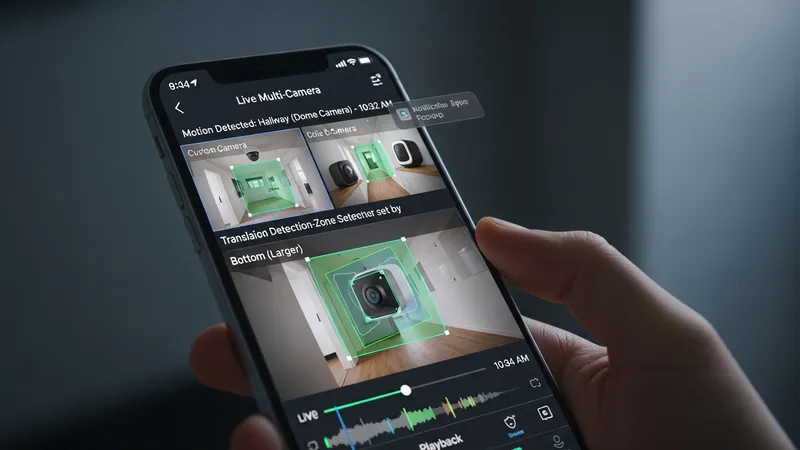
Feature sets commonly include motion detection, configurable alerts, night vision, and mobile app access. Motion detection may use simple pixel-change thresholds or more advanced scene analysis that recognises patterns to reduce false triggers. Night vision is implemented through infrared illumination or low-light sensors that can produce usable monochrome images in darkness. Mobile applications provide on-demand live view, event playback, and alert handling; they may also support multiple user accounts and cryptographic authentication. Feature firmware differences can affect how reliably these functions operate in practice.
When comparing systems, codec support and data rates matter for storage and network load. Modern devices often support H.264 or H.265 codecs to reduce file sizes while maintaining quality, although older devices may use legacy formats that increase storage demands. Frame rates influence motion smoothness and storage — common trade-offs include keeping lower continuous frame rates with short high-resolution clips on events. Power options influence installation flexibility: battery-powered units allow placement away from outlets but may impose duty cycles and charging intervals, while wired or PoE devices provide continuous operation.
Interoperability and integration with home automation platforms may be relevant depending on user needs. Some devices expose standardized APIs or support protocols such as ONVIF to allow third-party storage or centralised viewing. Integration can enable automated routines—for example, temporarily suspending recording during specific household modes—though such automation depends on secure authentication and careful configuration. Understanding these interaction patterns may inform choices about which device types and feature combinations are appropriate for a given monitoring objective.
Storage choices determine how long footage is retained and who can access it. Cloud-based retention typically provides managed backups and remote accessibility from mobile devices, but it depends on provider policies for retention windows and access controls. Local storage on microSD cards or a NAS keeps footage physically in the residence and can reduce reliance on third-party services, though it requires attention to local backups and physical security. Hybrid setups can offer a balance by storing continuous footage locally while uploading event clips to a cloud service for off-site redundancy.
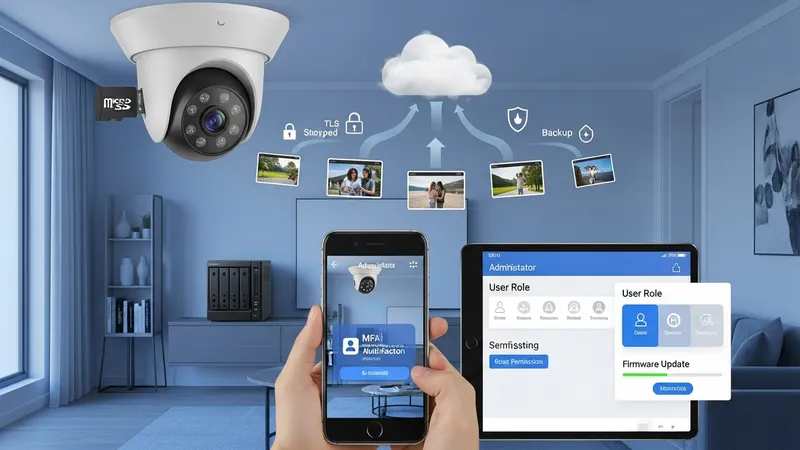
Access control and authentication are essential for protecting video streams and recordings. Systems usually allow multi-factor authentication or strong passwords, and administrators can often configure user roles to limit who can view or export footage. Secure transport protocols (such as TLS) are commonly used to encrypt data sent to cloud servers; similarly, encrypted storage on devices or servers helps limit exposure if storage media are accessed. Regular firmware updates address security vulnerabilities; therefore, a consistent update policy can reduce the risk of unauthorized access.
Data retention and privacy settings are practical considerations when managing recorded content. Many systems allow automated deletion schedules or maximum retention durations to limit stored data volume and reduce the time window of potential exposure. Privacy zones or masking features can block recording of designated areas within a camera’s field of view, which may be used to avoid capturing adjacent private spaces. Administrators may also configure whether video thumbnails or event metadata are visible to secondary users, helping to manage information exposure.
Remote access mechanisms influence convenience and security trade-offs. Peer-to-peer cloud connections simplify remote viewing by traversing NATs and firewalls, but they rely on a vendor-managed signalling service. Direct connections via port forwarding or VPN place more control under the property owner but require network configuration knowledge and ongoing management. Considerations such as expected remote usage patterns, network capabilities, and acceptable administrative overhead typically inform which access approach is preferable for a given household.
Optical characteristics and placement are primary determinants of usable footage. Field of view, focal length, and sensor size influence the balance between scene coverage and detail resolution. A wide-angle lens may capture an entire living space but render facial detail at a distance less legible, while a narrower lens concentrates detail in a limited area. Mounting height matters: placing a camera near eye level can reduce occlusion of objects but may be more intrusive than ceiling placement. Practical installations often involve iterative repositioning to reduce blind spots and optimize coverage for likely events.
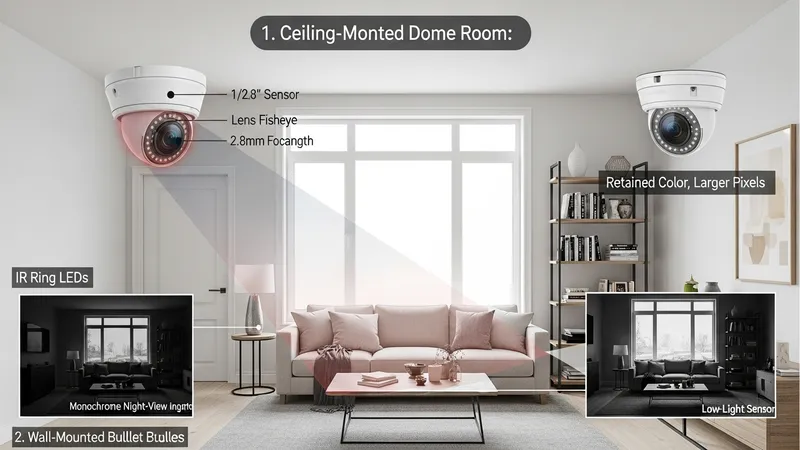
Lighting conditions affect image quality and the choice of sensor technology. Infrared illumination can provide reliable monochrome images in darkness, while low-light sensors with larger pixel sizes may retain color and detail at reduced lighting levels. Cameras positioned opposite bright windows or light sources may suffer from silhouette effects, so angle and location adjustments are common to mitigate backlighting. Some devices include wide dynamic range (WDR) processing to handle scenes with mixed lighting, which can improve facial recognition in high-contrast environments.
Network bandwidth and codec configuration shape operational performance. Continuous 1080p streaming at higher frame rates requires significantly more upstream capacity than intermittent event recording at reduced frame rates. Using efficient codecs such as H.265 can lower bandwidth and storage needs, but compatibility with viewing and storage infrastructure should be confirmed. Wired Ethernet or PoE can provide more consistent throughput than congested Wi‑Fi, though mesh networking or modern dual-band routers often deliver acceptable wireless performance for many indoor deployments.
Power and physical security considerations influence reliability and maintenance. Wired installations reduce battery maintenance but may require professional routing of cables. Battery-powered devices permit flexible placement but come with duty-cycle considerations and may need periodic recharging or replacement. Physical tamper resistance—such as secure mounts or screws—can deter casual interference, and concealing cables can reduce accidental disconnection. Regular inspection of mounting hardware, adhesive integrity, and environmental factors such as humidity may extend operational life and reduce unexpected downtime.
Recording inside a residence raises legal and ethical questions that vary by jurisdiction. Laws often differentiate between video-only capture and audio recording, with stronger restrictions commonly applied to audio in private spaces. Users may need to consider consent requirements for recording others in shared spaces and whether notices or explicit permission are appropriate for guests and service personnel. Familiarity with local statutes and case law is advisable when establishing monitoring practices in communal or multi-occupancy settings.
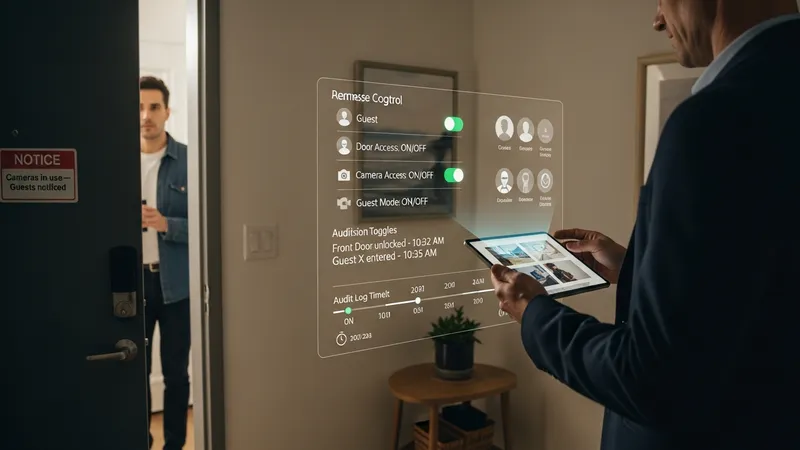
Ethical considerations relate to balancing safety objectives with personal privacy. Configuring cameras to avoid bedrooms and bathrooms, using privacy masks to block sensitive areas, and limiting retention periods are common measures that aim to protect household members’ dignity while preserving useful monitoring capability. Multi-user access control can restrict who may view live feeds or download recordings, and audit logs—where available—can provide a record of access events to support accountability within a household.
Network and data security measures reduce the risk that recorded material is accessed by unauthorized parties. Employing strong authentication, keeping device firmware current, and placing cameras on segmented networks can decrease exposure. When using cloud services, reviewing provider privacy policies and data handling practices may clarify where data is stored and under what circumstances it might be accessed. Exported footage should be handled cautiously, with awareness of how sharing may affect privacy expectations for other household members or visitors.
Operational transparency and household communication are practical ways to align monitoring with ethical norms. Discussing where cameras are placed, what they record, and how long footage is retained can establish shared expectations and reduce misunderstandings. Where relevant, configuring visible indicators—such as LEDs or app status indicators—can signal when a camera is active. These approaches support informed consent and contribute to a monitoring setup that aims to balance safety, convenience, and respect for privacy.