
Legal practitioners who handle motor-vehicle collision claims perform a combination of investigative, analytical, and procedural tasks to help an injured party pursue compensation. Their work often begins with an early intake to understand facts, identify potentially liable parties, and assess whether a civil claim may be appropriate under applicable law. These attorneys typically explain legal timelines, possible legal theories such as negligence, and the kinds of damages that may be asserted, including economic losses, non-economic losses, and sometimes property damage. The initial assessment may influence whether a claim proceeds by negotiation, alternative dispute resolution, or formal litigation.
Beyond initial evaluation, these lawyers commonly coordinate evidence collection, interact with insurers, prepare legal documents, and advise clients on procedural requirements. They may engage investigators, consult medical or accident reconstruction specialists, and request records such as police reports and medical bills. Communication with opposing parties and insurers is often ongoing and can shape settlement discussions. Throughout, the practitioner’s role can include explaining trade-offs, timelines, and potential outcomes in non-absolute language so clients may make informed decisions.
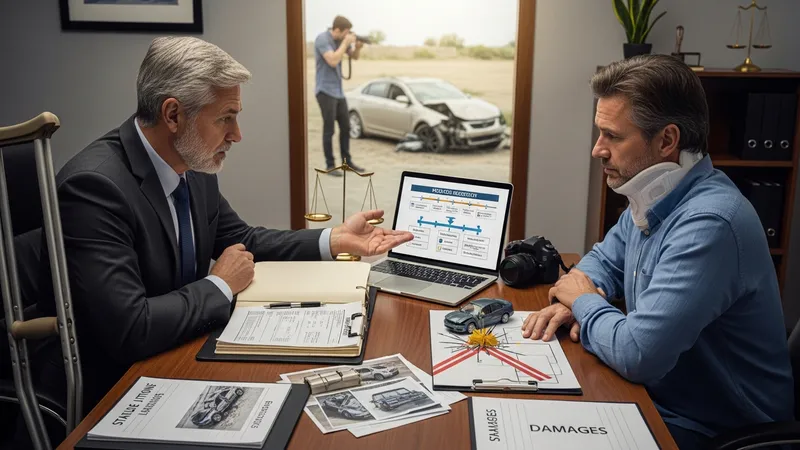
When comparing initial assessment methods, practitioners may use standardized checklists or bespoke intake interviews to identify crucial issues such as liability factors, contributory negligence, and recoverable losses. Some firms or practitioners often document timelines and claim milestones in a client-facing summary so expectations are clearer. Differences in approach can reflect experience with local court procedures and insurance practices. For claimants, understanding that intake is exploratory rather than determinative may help set realistic expectations: an assessment often identifies both potential strengths and weaknesses of a case without promising particular outcomes.
Evidence collection strategies commonly balance speed and thoroughness. Promptly securing perishable evidence—photographs, video, or witness contact information—can be important, while medical records and expert reports may take longer to obtain. Legal professionals may coordinate with medical providers to obtain detailed treatment summaries that link injuries to the incident; such linkage is typically central to damage claims. Investigation may also include obtaining traffic surveillance, cellphone records, or vehicle event data when available. The process may often benefit from early preservation requests or subpoenas where cooperation is limited.
In communication with insurers, legal representatives typically use structured documentation and recorded settlement positions that reflect liability, damages, and applicable law. Insurers commonly request recorded statements, releases, and medical authorizations; professionals often advise on the implications of these requests and may handle negotiations to limit unnecessary disclosures. Settlement discussions frequently involve a mixture of written offers, demand letters, and back-and-forth proposals. Alternative dispute resolution, such as mediation, may be used to explore settlement when direct negotiation stalls, with mediators seeking mutually acceptable resolutions without trial.
When cases proceed toward litigation, documentation and procedural compliance become more prominent. Counsel often prepares pleadings, discovery requests, and deposition questions, and may retain experts to prepare written reports. Litigation timelines are subject to court schedules and rules that can vary by jurisdiction, and motions practice may address evidentiary or procedural disputes. Trial preparation typically includes exhibit organization, witness preparation, and developing demonstrative evidence. The litigation route may be more time-consuming and resource-intensive than negotiated settlements, which is an important consideration during early case planning.
In summary, legal professionals who handle motor-vehicle injury claims perform a range of roles from fact assessment and evidence gathering to negotiation and courtroom preparation. Their activities may include coordinating specialists, managing communications with insurers, preparing legal filings, and guiding procedural steps. The next sections examine practical components and considerations in more detail.
An initial case assessment typically clarifies parties, incident chronology, and potential legal theories such as negligence or statutory violations. The practitioner may review police reports, photographs, and immediate medical notes to identify elements like duty, breach, causation, and damages. Time limits for filing claims are usually checked early to avoid forfeiture of rights. During counseling, attorneys often explain how comparative fault rules, contributory negligence, or similar doctrines in a jurisdiction may affect recovery. This phase can also include discussing fee arrangements and the implications of contingency billing or cost advances in a neutral, informational way.
Client counseling often covers expectations about evidence needs and typical timelines. Attorneys may outline likely phases of a claim—investigation, demand, negotiation, discovery, and possible trial—while noting that many claims settle before trial. They may also advise on practical steps clients can take to preserve evidence, such as retaining medical records and documenting out-of-pocket expenses. While such guidance is educational, it typically refrains from promising outcomes and instead frames actions as means to support stronger documentation and clearer case development.
Some assessments incorporate input from external specialists early on. For example, a medical consultant might review initial treatment records to indicate whether injuries could be causally related to the collision, while an accident reconstruction expert may offer a preliminary view of impact dynamics. These consults are often used to prioritize further investigation and to estimate potential evidentiary needs. The decision to retain experts usually reflects a cost–benefit consideration, as experts can add persuasive weight but also increase expenses and timelines.
Practical considerations during intake may also include insurance coverage analysis. Counsel may check for primary and secondary coverage, uninsured or underinsured motorist options, and possible third-party liability. Understanding which policies might apply often informs strategy for presenting claims and negotiating with insurers. This phase is informational: it typically clarifies available procedural avenues rather than asserting particular remedies as guaranteed.
Collecting and organizing evidence is a central component of claim development and often proceeds in stages. Early steps commonly involve preserving perishable materials like photographs, dashcam footage, and contemporaneous witness statements. Medical records and billing statements are gathered to document treatment and economic loss. Where relevant, counsel may request vehicle inspection reports, maintenance histories, or event data recorder information. Proper chain-of-custody practices and contemporaneous notes can help maintain evidentiary integrity should the matter advance to litigation or formal dispute resolution.
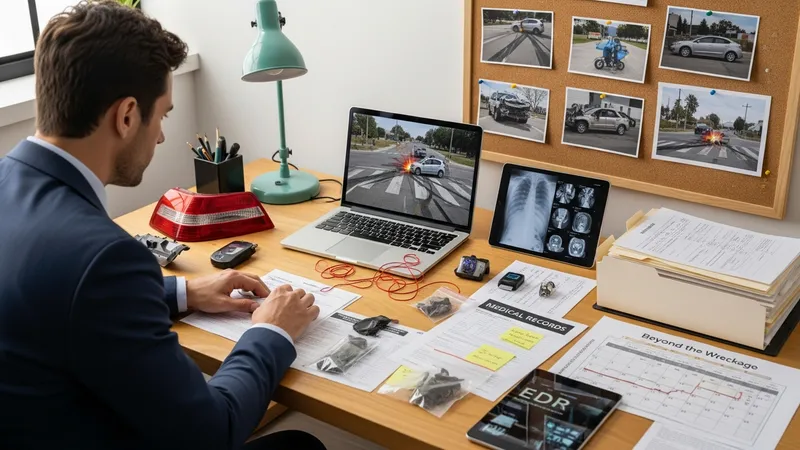
Coordination with medical providers is frequently necessary to create clear treatment timelines and causation narratives. Attorneys often seek narrative medical records, diagnostic imaging reports, and treating provider summaries that link injury to treatment. Where causation is disputed, counsel may obtain independent medical examinations or expert opinions; such steps can clarify contested medical issues but may also involve additional time and expense. These actions are presented as investigative choices that can strengthen evidentiary support rather than guarantees of recovery.
Witness statements and third-party records can play a useful role in corroborating accounts. Counsel often attempt to identify neutral witnesses and secure written or recorded statements while recollections are fresh. Public records—such as traffic citations or municipal maintenance reports—may provide context about roadway conditions or traffic control devices. In some cases, legal practitioners use subpoenas or preservation letters to compel retention of surveillance footage or electronic records that might otherwise be overwritten.
Organizational practices for documentation can affect efficiency later in a claim. Creating a chronological file, maintaining clear billing and expense records, and developing exhibit lists for major items of proof are typical practices. These organizational steps often facilitate settlement discussions and prepare the case for possible discovery or trial. While such practices do not ensure a particular outcome, they may make legal processes more transparent and manageable for clients and opposing parties.
Negotiation with insurers typically involves written demands, responses, and periodic exchanges of supporting documentation. Counsel often prepare a demand package summarizing liability, damages, and supporting records, which insurers review to formulate offers. Negotiation may proceed through adjusters, defense counsel, or structured mediation. Attorneys commonly assess the sufficiency of offers against quantified damages, litigation risk, and client preferences. Emphasizing documentation and realistic valuation may assist parties in bridging gaps, while maintaining that settlement discussions do not predict specific results.

Mediation and arbitration are common alternative dispute resolution (ADR) avenues that may be used when direct negotiation stalls or when parties seek a non-trial resolution. Mediation involves a neutral facilitator who assists parties in exploring settlement; it usually preserves decision-making with the parties. Arbitration typically results in a binding decision by an arbitrator and may be used when contracts or procedural rules require it. Counsel often review ADR rules, potential costs, and evidentiary standards before recommending ADR as a strategic option, noting that ADR can be more expedited but may limit certain procedural rights compared with trial.
Insurer practices vary and can influence negotiation timelines. Some insurers may initially make low offers to test claim strength, while others may engage more substantively when liability appears clear. Legal professionals often use demand packages, settlement ranges, and, when appropriate, expert reports to substantiate positions. Recording offers and counteroffers in writing helps maintain clarity. These negotiation techniques are informational; they illustrate typical practices without implying that any particular strategy will produce a defined outcome.
Practical considerations often include estimating potential net recovery after expenses and considering the time value of resolution. Legal fees, expert costs, and anticipated delays may affect decisions about whether to continue negotiations or prepare for trial. Counsel typically present these trade-offs as considerations for clients to weigh rather than directives. Transparency about likely timelines and costs can help align expectations and support more informed decision-making during settlement discussions.
When a claim proceeds to litigation, formal procedures such as pleadings, discovery, and motion practice structure case development. Pleadings establish the parties and basic factual and legal allegations. Discovery—interrogatories, document requests, and depositions—permits factual narrowing and expert identification. Motions may resolve disputes over evidence, jurisdiction, or procedural matters prior to trial. Attorneys typically prepare witness lists and exhibits and may conduct mock examinations to prepare witnesses. These procedural steps are governed by court rules that vary by jurisdiction and can influence strategy and timelines.
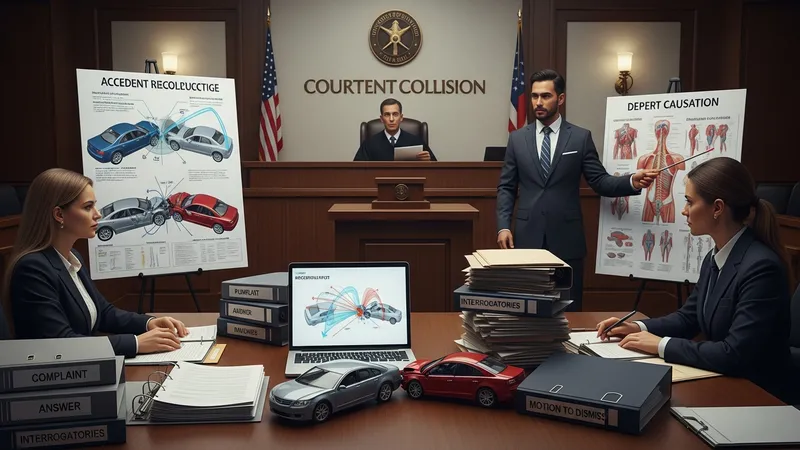
Expert testimony often plays an important role in complex issues like accident reconstruction or medical causation. Experts typically produce written reports and may be deposed prior to trial. Counsel evaluates the necessity of experts based on case complexity, likely defenses, and comparative cost. Presentation of expert opinions at trial requires adherence to admissibility standards in the relevant jurisdiction, which may include reliability and relevance thresholds. These considerations help frame the evidentiary strategy but do not guarantee specific judicial rulings.
Courtroom presentation focuses on persuasive, admissible evidence and clear witness testimony. Trial preparation commonly includes organizing exhibits, preparing demonstratives, and rehearsing direct and cross-examinations. Jury instructions and the selection process (voir dire) may shape trial dynamics in jurisdictions that use juries. Trials may culminate in verdicts, and subsequently parties may file appeals addressing legal errors. The prospect of trial often influences settlement calculus earlier in the process, given differences in time and resource commitments.
Post-trial and enforcement matters can include judgment collection, liens, or appeals. Counsel may assist in enforcing a judgment or in negotiating post-judgment resolutions. In some cases, statutory caps, subrogation claims, or policy limits affect post-judgment recovery. These downstream matters are typically part of comprehensive case planning discussed during earlier phases, framed as procedural possibilities rather than assured results. Understanding these potential outcomes may help claimants and representatives plan for administrative and financial implications following trial or settlement.